
Osteoarthritis describes a progressive wearing away of the cartilage that covers the ends bone in a joint. It is an extremely common condition that effects joints as you get older. Approximately 13% of women and 10% of men 60 years and older have symptomatic knee osteoarthritis.
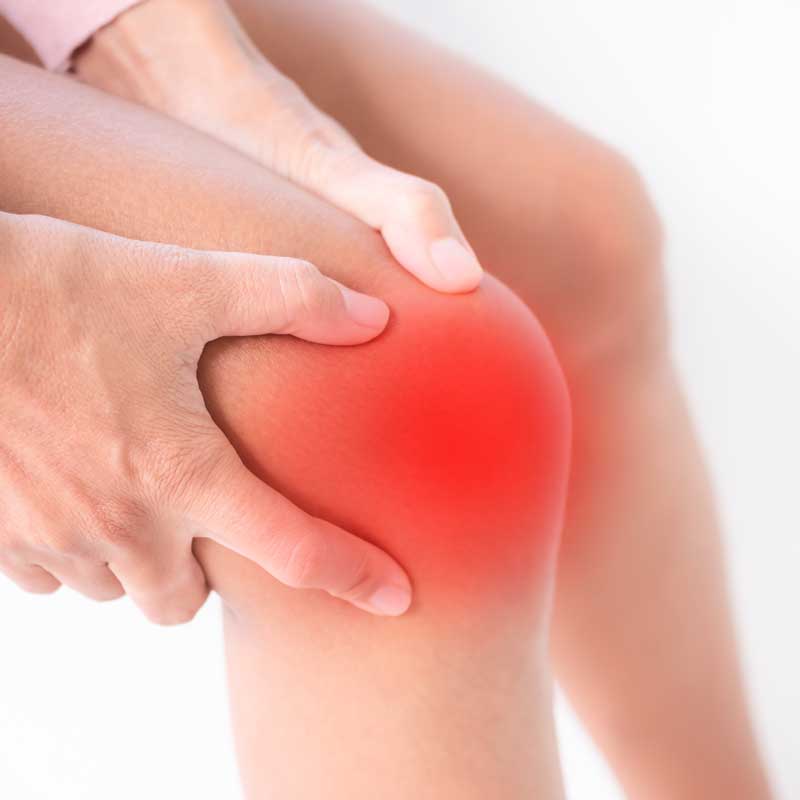
Signs of knee osteoarthritis include:
- Knee pain
- Restricted range of motion
- Swelling in the knee joint
- Stiffness in the knee first thing in the morning that lasts less than 1 hour
- Stiffness in the knee following rest
- Pain worsens with prolonged positions and prolonged weight-bearing
Although x-rays can be useful in diagnosing this condition and providing a measurement of structural changes, clinically they do not provide a perfect picture of how someone is able to function, what their pain levels are, or whether the osteoarthritis will progress. Interestingly, only 15% of people with knee osteoarthritis on x-ray will have symptoms.
There are many risk factors that lead to the development of osteoarthritis. Some of these are non-modifiable and others are modifiable. Things such as age, sex, race, genetics and joint shape are non-modifiable. Obesity, overload and physical inactivity/activity are modifiable. Other factors will fall into both categories such as joint injury, general health, psychological factors and other health conditions. Some things we cannot control, others we can and potentially positively impact our osteoarthritis symptoms.
There are numerous clinical practice guidelines for how to manage osteoarthritis. These are put together by some of the top researchers and clinicians in the field. Current recommendations all include:
- Exercise works to improve the flexibility, range of motion, strength and endurance of the joint. Muscles across the joint will act like shocks do in a car – better shocks, less wear and tear to the car frame. Stronger muscles, less impact forces to the joint. A Cochrane review on the effects of exercise in knee osteoarthritis founds that exercise significantly reduced pain, improved physical function to a moderate degree.
- Current dosage recommendations for exercise are 3 to 5 times per week over 8 to 12 weeks. The Physio Fixes program will guide you through a strengthening program designed to meet you where you’re at and build your strength and flexibility.
- Weight Loss can be important for offloading the joint. During walking the force on the knee joint is estimated to be 2.5 to 2.8 times a person’s body weight. On stairs, it is 2.8 times a person’s body weight for going upstairs and 3.1 times for going downstairs. If a person is overweight or obese a loss of 5% or greater of their body weight has been shown to have clinically significant results. Please discuss this further with your healthcare team as there are numerous other healthcare professions (physician, dietician, nutritionist, etc.) that can make the process of losing weight more effective.
- Aerobic exercise has the benefits of reducing fatigue, building stamina/endurance, assisting in weight loss and is beneficial for our general health and other systemic conditions. The current guidelines recommend 150 minutes of moderate-intensity or 75 minutes of vigorous-intensity exercise each week, or a combination of those options. This can be divided into multiple sessions (ie. 5 days for 30 minutes), but should be a minimum of 10 minutes in duration. The most commonly studied exercise is walking. If you are unable to walk or don’t like walking you can use non-weightbearing exercises. This would include things such as biking, swimming, or aquacise. These same guidelines also recommend 2 days/week of strengthening exercises, such as the Physio Fixes program.
- Assistive walking devices or bracing can be useful if you feel your balance has decreased or if you need to offload your knee joint for less pain/better function. Assistive devices would include things like a cane or walker.
- Pain can be more than just a structural issue. Think about a time when you were short on sleep or stressed, usually, things feel worse. That’s not saying the arthritis isn’t causing structural pain in your knee. However, there may be other factors that can intensify the pain you feel (or conversely, decrease the pain you feel) and are potential areas you can work to address. See this link for a 5-minute video that helps to explain what happens when we have pain and how other things like stress, sleep, fear and beliefs can influence it.
Ready to get started! Please see the Physio Fixes program below to start on your way!
DISCLAIMER: This information is not intended as medical advice or a substitute for medical counseling. By choosing to follow the information that follows, you recognize that despite all precautions taken by Physio Fixes Inc. there is a potential risk of injury and you expressly acknowledge such risks and waive, relinquish, and release any claim that you may have against Physio Fixes Inc. You should always get evaluated for exercise by a physician or medical professionals, especially if symptoms occur from a trauma or are worsening. The user agrees by purchasing this program that Physio Fixes will not be held responsible in the event that an injury occurs.
References
American Academy of Orthopaedic Surgeons Management of Osteoarthritis of the Knee (NonArthroplasty) Evidence-Based Clinical Practice Guideline. https://www.aaos.org/oak3cpg Published 08/31/2021
D’Lima DD, Fregly BJ, Patil S, Steklov N, Colwell CW Jr. Knee joint forces: prediction, measurement, and significance. Proc Inst Mech Eng H. 2012 Feb;226(2):95-102. doi: 10.1177/0954411911433372. PMID: 22468461; PMCID: PMC3324308.
Fransen M, McConnell S, Harmer AR, Van der Esch M, Simic M, Bennell KL. Exercise for osteoarthritis of the knee: a Cochrane systematic review. Br J Sports Med. 2015 Dec;49(24):1554-7. doi: 10.1136/bjsports-2015-095424. Epub 2015 Sep 24. PMID: 26405113.
Hsu H, Siwiec RM. Knee Osteoarthritis. [Updated 2023 Jun 26]. In: StatPearls [Internet]. Treasure Island (FL): StatPearls Publishing; 2024 Jan-. Available from: https://www.ncbi.nlm.nih.gov/books/NBK507884/
Raposo F, Ramos M, Lúcia Cruz A. Effects of exercise on knee osteoarthritis: A systematic review. Musculoskeletal Care. 2021 Dec;19(4):399-435. doi: 10.1002/msc.1538. Epub 2021 Mar 5. PMID: 33666347.
The Royal Australian College of General Practitioners. Guideline for the management of knee and hip osteoarthritis. 2nd edn. East Melbourne, Vic: RACGP, 2018.
